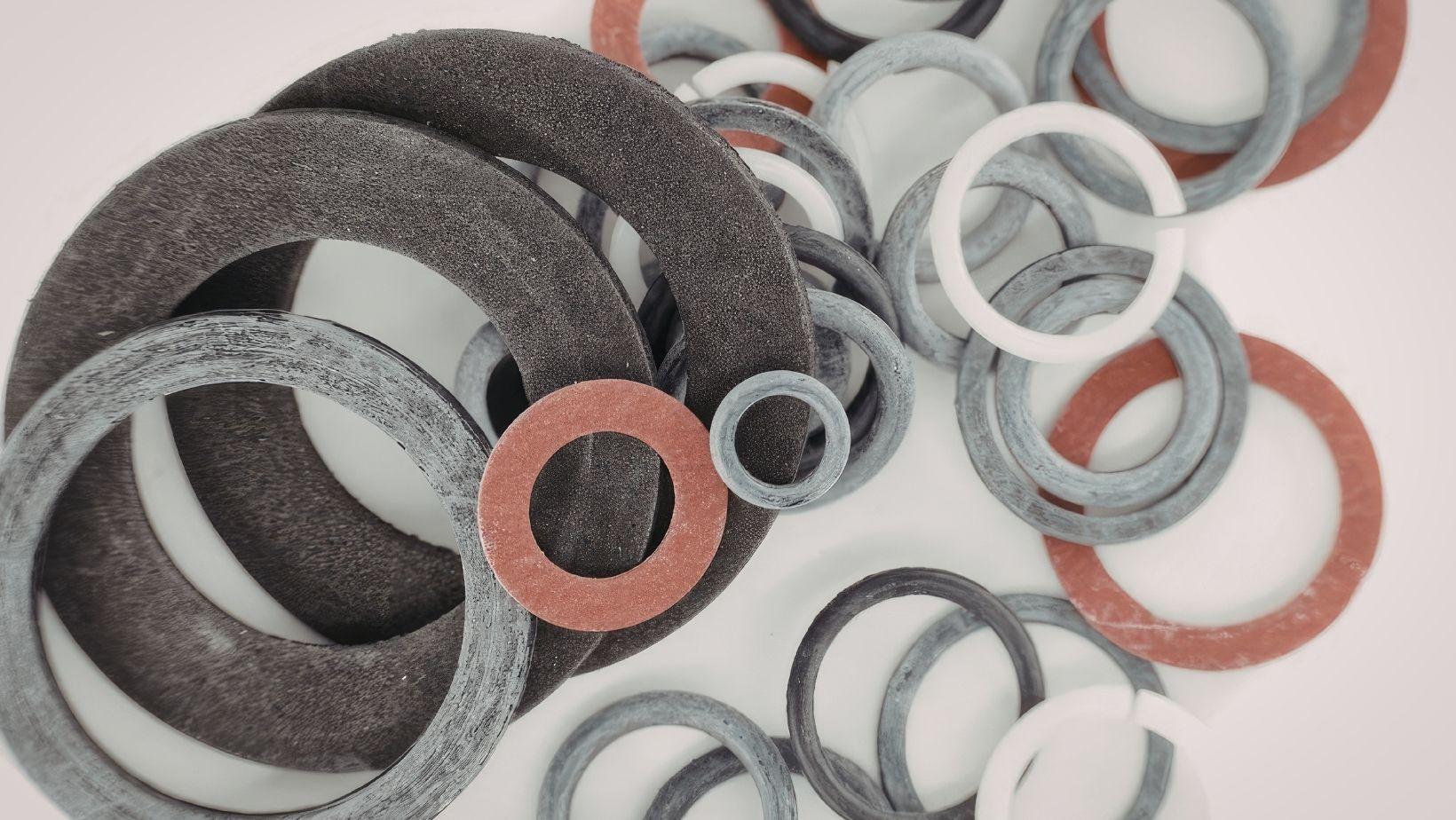
Gasket reinforcement is a factor in industrial systems where sealing performance must remain stable under pressure, temperature changes and mechanical stress. Standard gasket materials are susceptible to deformation, degradation or premature failure in demanding applications if they lack structural support. Reinforcement maintains the integrity of the gasket – increasing its strength and stability – these qualities are necessary in industries like chemical processing, power generation, oil plus gas and heavy manufacturing, where equipment downtime and leaks result in significant operational difficulties.
The Role of Reinforcement in Harsh Conditions
Gasket reinforcement is a method for maintaining a secure seal in environments where equipment undergoes fluctuating pressure but also temperature. Gaskets without reinforcement are prone to uneven compression or loss of shape, which creates paths for leaks. Reinforced designs are useful for distributing mechanical loads evenly, which reduces the points of high stress that often cause failure – this feature is useful in systems with repeated thermal cycling, where expansion and contraction are likely to degrade materials that lack reinforcement.
Sealing systems are also more reliable when they include reinforcement if they are in abrasive or chemically reactive environments. High temperature applications often use ceramic fiber insulation because it provides resistance to heat and structural strength. Fabric fiberglass is another material that is common in similar environments to increase tensile strength as well as size stability – these elements are responsible for ensuring the gasket continues to seal even when it is in external conditions that usually increase the rate of wear.
Material Performance Under Stress
Gaskets that lack reinforcement are subject to creep, extrusion or compression set when they are under a continuous mechanical load – these issues are causes of reduced sealing effectiveness and a higher probability of leaks. Reinforced gaskets are a solution to these problems because they include structural elements that support the material. The sealing surface is able to maintain constant contact with flanges or mating parts during long periods of stress.
The interaction between reinforcement layers and base materials is also a factor in performance. Reinforced composites are helpful in high pressure systems because they stabilize the gasket structure or prevent deformation – this stability is helpful in applications with vibration or pulsating flow, where continuous movement is a cause of weakness in standard seals. The integration of reinforcing layers is the reason a gasket keeps its shape and function when operating conditions change.
Operational Reliability & Maintenance
Improved operational reliability is a primary benefit of gasket reinforcement. Systems are less likely to experience unexpected failures when they use reinforced gaskets, which leads to less downtime and less frequent maintenance – this reliability is beneficial in continuous processing industries where shutdowns are expensive. Because reinforced gaskets have a predictable service life, maintenance teams are able to plan replacements more efficiently.
Reinforced gaskets are also helpful for simplifying inspection next to replacement schedules. Signs of wear are easier to see before a total failure occurs because these gaskets degrade slowly – this characteristic is a factor in safety and reduces the risk of leaks or system contamination. Using reinforcement is a way to achieve stable operations, lower repair costs and higher efficiency in industrial sealing systems.
Reinforcement is a practical method to improve sealing reliability plus extend the life of equipment in demanding industrial applications. It is effective under pressure, temperature changes and mechanical stress. Reinforcement is a valuable part of any system where dependable sealing is required for safety and cost control because it supports the gasket structure but also ensures consistent performance. It also helps engineers design systems with greater confidence in performance consistency across a wide range of operating conditions.