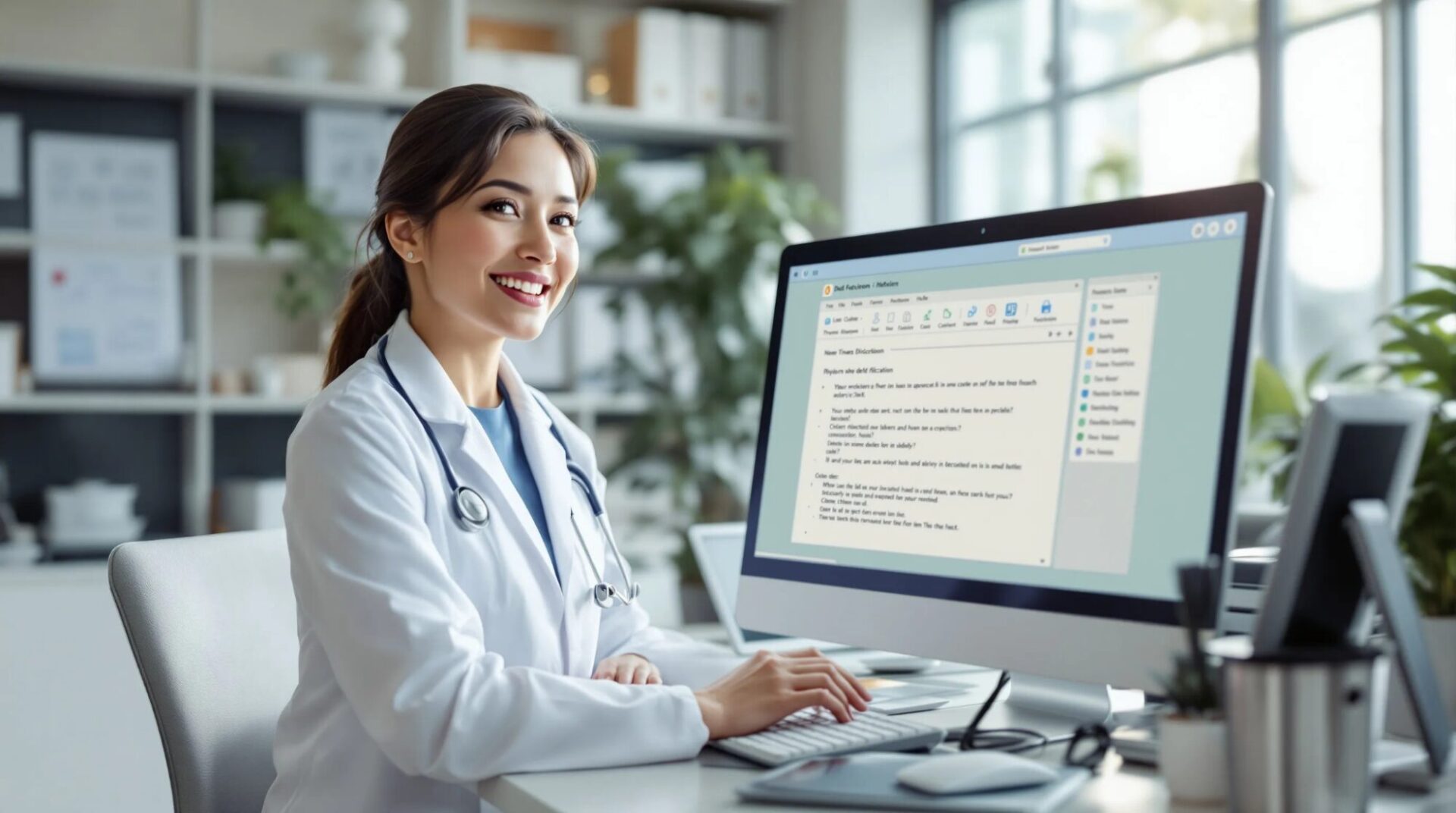
Let’s face it: writing up patient notes can feel like a second job. Between the countless patients we see and the mountains of paperwork, doctors can often wonder if there’s a better way. Enter medical speech to text software, the superhero we didn’t know we needed. This innovative technology doesn’t just save us time: it transforms the way we approach documentation. So, grab a coffee, sit back, and let’s explore how this technology is changing the face of healthcare documentation, that pesky paperwork just got a lot easier.
What Is Medical Speech To Text Software?
Medical speech to text software is a groundbreaking technology that converts spoken language into written text, specifically tailored for the healthcare industry. Imagine having your thoughts translated into medical documentation as you speak, without the stress of typing everything out. This software utilizes sophisticated algorithms and natural language processing to understand medical terminology, making it an essential tool for healthcare professionals. In short, it’s like having a scribe at your side, a scribe that never gets tired.
This software integrates seamlessly with electronic health record (EHR) systems, enabling us to create, edit, and store notes effortlessly. It’s designed to recognize medical jargon and can even understand different accents and dialects, making it a versatile solution for diverse healthcare environments.
Benefits Of Using Speech To Text Software In Healthcare
Using speech to text software in healthcare offers a plethora of benefits that can streamline our workflow. First and foremost, let’s talk about efficiency. Instead of spending valuable minutes, or even hours, typing up notes, we can narrate details about our patients in real time. Imagine how much more we can accomplish. Less time on paperwork means more time with patients.
Not only does this software enhance productivity, but it also significantly reduces the risk of transcription errors. When we dictate notes, the likelihood of incorrect data entry decreases dramatically, leading to more accurate patient records. Also, speech to text software improves documentation accuracy, ensuring that every detail is captured correctly.
Let’s not overlook the aspect of accessibility: with voice commands, everyone, including those with physical disabilities, can manage documentation with ease. This inclusion is not just a bonus: it’s a vital feature that promotes equality in healthcare.
Key Features To Look For In Medical Speech To Text Software
When selecting medical speech to text software, we must keep our eyes peeled for specific features that enhance its effectiveness. First, compatibility with existing EHR systems is a must. If it doesn’t integrate well with what we already use, it could create more headaches than solutions.
Next, look for custom vocabulary capabilities. This ensures the software recognizes and sets our unique medical terminology. After all, it’s crucial that our specialty-specific language is always understood accurately.
Real-time transcription is also essential. We want immediate results as we dictate, allowing us to continue with our flow of thought without interruption.
Besides, speech recognition accuracy is paramount. If the software can’t accurately capture what we say, it’s not worth our time. Finally, ensure there’s a user-friendly interface. We don’t want to spend time figuring out complicated software when we could be attending to our patients.
Challenges And Limitations
While the advantages are compelling, we must also address the challenges and limitations of medical speech to text software. One of the foremost concerns is the technology’s recognition accuracy. Even though advancements, some software still struggles with complex medical terminology or regional accents, leading to potential misinterpretations.
Also, reliance on technology can present issues. Software malfunctions or internet connectivity problems could disrupt our workflow, creating unnecessary delays. Also, privacy and security concerns about patient data are rampant. It’s vital to choose software that complies with HIPAA regulations and prioritizes data security to protect sensitive information.
Finally, some team members may be hesitant to adopt new technology. Resistance to change is natural, and overcoming this requires training and support to ensure everyone feels comfortable with the transition.
Future Trends In Medical Speech To Text Technology
The future of medical speech to text technology is brimming with possibilities. As artificial intelligence continues to evolve, we anticipate that the software will become even more accurate and intuitive. Imagine a world where we can speak naturally, and the technology anticipates our words with minimal corrections needed.
Another trend to watch is the integration of artificial intelligence for improved context understanding. This means that software might not only capture our words but also understand the context behind them, leading to more comprehensive documentation.
Also, we’ll see a rise in cloud-based solutions, allowing us to access our documentation securely from anywhere. Flexibility is key in today’s fast-paced healthcare environment, making this trend particularly exciting.